

Where they matter, why they’re showing up, and practical applications for antimicrobial 3D printing filament you can deploy today
Aerospace is obsessed with reliability for a reason: small failures cascade into big costs. Whether you’re building aircraft interiors, manufacturing components, or supporting operations on the ground (or in orbit), you’re constantly battling a quiet enemy that doesn’t show up on CAD: microbial buildup on surfaces.
This isn’t just a hygiene conversation. In aerospace, microbes and biofilms can drive:
- surface staining and odor
- accelerated material “grime” and visible degradation
- higher cleaning frequency (and chemical exposure)
- maintenance time and part replacement cycles
And that’s exactly where professional antimicrobial polymer technology, including engineered platforms like Keep Klear MatriX antimicrobial 3D printing filaments, starts to look like an operational advantage.
Why aerospace should care about microbes on surfaces
Aircraft cabins and lavatories are high-touch built environments. Multiple studies show that interior surfaces can be colonized by diverse microorganisms, with “hotspot” zones around seat and lavatory areas. A systematic review found frequent colonization on surfaces like tray tables, armrests, seat areas, and lavatories.
At the same time, cabin microbiome research suggests most organisms are common human-associated microbes, but the key issue isn’t panic; it’s persistence and surface conditioning. Touch surfaces accumulate biological residue, and biofilms can become harder to remove than simple contamination.
For aerospace operators and MRO teams, this translates into a straightforward reality: high-touch parts demand frequent cleaning, and frequent cleaning can stress materials.
Cleaning is necessary, but it can also damage aircraft interiors.
major challenge in aviation is that you can’t just use any disinfectant anywhere. FAA-linked guidance has warned that improper disinfection chemical use can cause negative impacts, including corrosion, embrittlement, increased flammability, and electrical short circuits.
International guidance also emphasizes that disinfection procedures should be adopted in consultation with aircraft manufacturers and based on safety risk assessment, reflecting how sensitive aircraft materials and systems can be.
So aerospace teams are stuck between two pressures:
- Keep high-touch surfaces clean
- Avoid chemical regimens that degrade materials or introduce risks
This is one reason the industry has explored built-in antimicrobial approaches for high-touch interior parts. For example, suppliers have publicly discussed antimicrobial treatments integrated into interior components to provide ongoing surface protection between cleaning cycles (while still requiring normal cleaning).
Where an antimicrobial 3d printing filament fits
In professional settings, antimicrobial polymers are positioned strictly in alignment with frameworks like Canada’s PMRA as “treated articles” to protect the printed part itself. Advanced platforms, such as Keep Klear MatriX, utilize a proprietary copper-based additive integrated directly into the polymer matrix during extrusion. This disrupts microbial cell membranes without surface leaching to reduce microbial growth and limit biofilm-related issues like odor and staining.
A key point: high-performance antimicrobial 3D printing filaments are evaluated using rigorous standards. For example, the MatriX platform is validated under ISO 22196 methodology against challenging environmental bacteria including MRSA, VRE (Enterococcus faecalis), Pseudomonas aeruginosa, Acinetobacter baumannii, and Klebsiella pneumoniae.
For aerospace users, the most practical value of using an antimicrobial 3d printing filament is often:
- cleaner-looking surfaces for longer
- reduced odor/staining caused by microbes
- less aggressive cleaning dependence on some parts
- more stable surface performance in high-touch environments
Not “sterility.” Not “infection prevention.” Not a medical device. Instead: material integrity + surface stability in demanding environments.
High-impact aerospace applications for antimicrobial 3D printing filaments
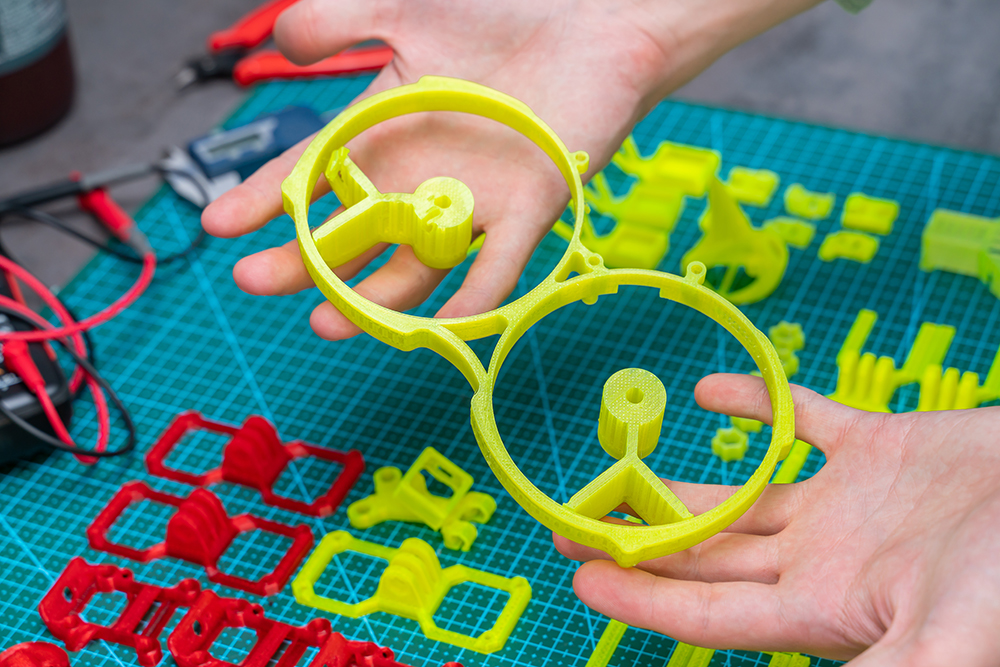
1) Production tooling, jigs, fixtures, and gauges
Aerospace manufacturing already relies heavily on 3D printing for:
- assembly jigs and drill guides
- metrology aids
- fit-check fixtures
- ergonomic tool holders
- protective caps and covers
These items are handled constantly, shared across shifts, and often stored in industrial environments. Antimicrobial 3D printing materials can be a practical upgrade when you want tooling that stays visibly cleaner and more resistant to odor/staining over time, especially in humid or high-handling zones.
Why it matters: fewer “gross” tools, less frequent replacement, better shop-floor discipline.
2) Cabin interior non-structural parts (where allowed)
2) Cabin interior non-structural parts (where allowed) Many interior cabin and lavatory parts fall into a category where appearance and cleanliness perception matters as much as function:
- trim covers
- non-structural brackets
- housings and mounts
- service panels
- high-touch accessory parts (depending on certification requirements)
Aerospace interior suppliers have already moved toward antimicrobial approaches for high-touch parts. For additive manufacturing teams supporting interiors, antimicrobial materials can be considered when producing prototype parts, replacement non-critical components, or ground trial components, always within certification pathways.
Why it matters: reduced visible degradation and odors on parts that see repeated contact and wipe-downs.
3) Ground support equipment and MRO tooling
This is one of the fastest, lowest-friction areas to adopt antimicrobial 3d printing filaments because certification constraints are often lower than for flight hardware. Examples:
- tool shadow boards and clips
- handheld fixtures
- cable organizers
- protective end-caps
- maintenance stands accessories
- reusable protective covers
Why it matters: these tools live in hangars and busy airports environments where grime and microbial buildup is normal.
4) Space and life-support adjacent lessons: biofilms are not trivial
In spaceflight contexts, biofilms aren’t just about cleaning, they can become an engineering problem. NASA research has studied biofilm formation and its potential to contribute to biofouling and corrosion in systems relevant to the ISS (including water systems), and how difficult biofilms can be to clear once established.
This reinforces a broader aerospace principle: If you can reduce surface colonization and biofilm formation tendencies on frequently used parts, you reduce maintenance burden and operational risk.
What aerospace buyers should ask before adopting an antimicrobial 3d printing filament If you’re evaluating antimicrobial filaments (or antimicrobial polymer parts more broadly), treat it like a professional qualification process:
- What standard test method supports the antimicrobial performance? Ensure it is validated against relevant organisms (like MRSA or Pseudomonas) using ISO 22196, as seen with production-grade materials like Keep Klear MatriX.
- Is the antimicrobial effect embedded or coated? Embedded additives (like copper infused directly into the polymer matrix during extrusion) generally aim for longer-term surface behavior than coatings, which can wear and leach.
- How does it behave under repeated cleaning? This matters because aviation disinfection practices must balance safety with material compatibility.
- Does the supplier provide manufacturing discipline? Aerospace workflows require tight diameter tolerances, strong interlayer bonding, and batch-coded spool traceability, not hobby-grade filament.
- What is the claim boundary? Aerospace teams should avoid materials marketed with vague “health protection” promises. The best suppliers focus on surface protection and explicitly state the material is not meant to prevent disease.
The bottom line Aerospace is already using antimicrobial approaches in interiors, and the scientific rationale is clear: high-touch environments accumulate microbes, cleaning is constant, and cleaning can damage materials over time.
Professional antimicrobial 3D printing filaments belong in aerospace where they deliver real operational value:
- production tooling and fixtures
- MRO and ground support accessories
- selected interior non-critical parts (subject to certification)
- environments where surface stability and odor/staining resistance matter
It’s not about replacing cleaning. It’s about making surfaces behave better between cleanings, and making parts last longer in the real world.